Material By-Greve Moon
Refractive surgery has actually come a long way in the last couple of years, changing the lives of millions by correcting vision troubles and helping individuals to see clearly. Breakthroughs in medical technology have enabled a lot more specific procedures that are more secure and extra reliable than ever before. In this post, we will have a look at the evolution of refractive surgical treatment throughout background to much better recognize its trip from old times to today day.
The initial well-known treatment for remedying vision was referred to as early as 200 BC, when Roman thinker Antyllus utilized a bent needle to make lacerations in the cornea. This primitive type of surgery continued to be mostly unchanged up until the 19th century, when eye doctors began utilizing scissors and scalpels to execute surgeries on the eye. In 1948, Dr. Jose Barraquer transformed refractive surgery with his development of keratomileusis, which reshaped the cornea with an instrument called a microkeratome.
Since then, there has actually been a flurry of technological improvements in refractive surgical procedure that have actually made it much easier on both people and doctors alike. https://writeablog.net/douglas86arianna/a-comprehensive-guide-to-understanding-cataract-eye-surgery -based treatments such as LASIK have actually come to be significantly prominent over recent years, permitting people to experience more clear vision with no intrusive strategies or lengthy recuperation times. In this article, we will certainly explore each step along this trip thoroughly and check out exactly how much refractive surgery has actually been available in such a short amount of time.
1. Summary Of Refractive Surgical Treatment
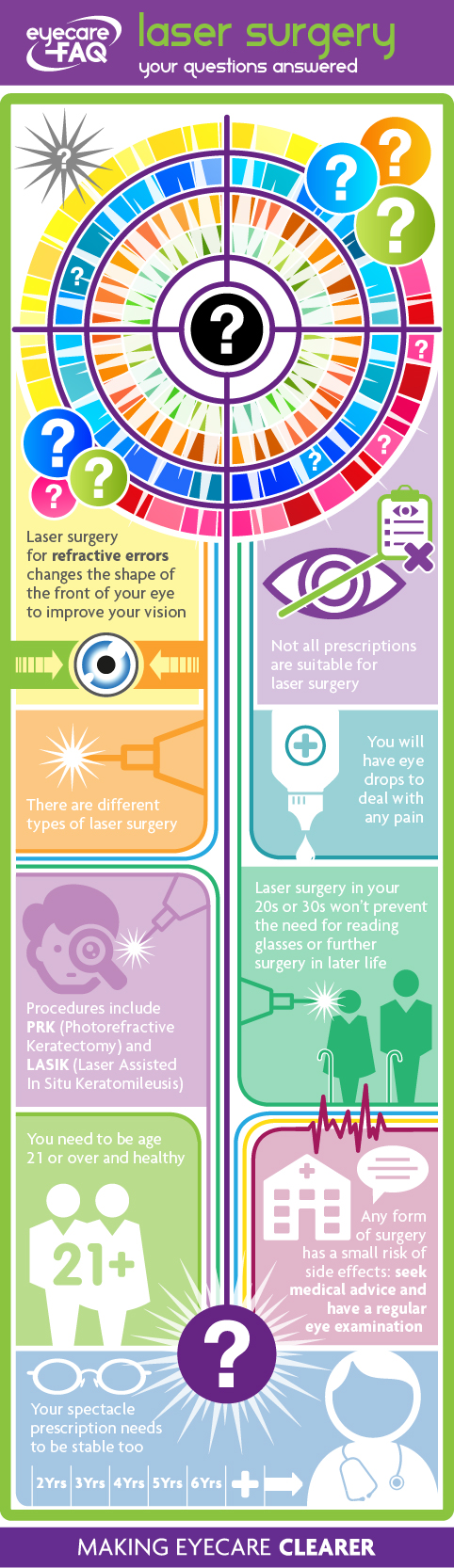
Refractive surgical treatment is a kind of eye surgical treatment that aids to fix vision problems caused by refractive errors. It has actually come to be significantly prominent over the last couple of years as a means to lower or get rid of the demand for glasses and contact lenses. https://www.ophthalmologytimes.com/view/benefits-of-topography-guided-treatments-for-irregular-corneas write-up will certainly review the history of refractive surgical treatment and offer an overview of its advancement in time.
The initial significant innovation in refractive surgical procedure took place in 1950, when Dr. https://postheaven.net/federicocliff/thinking-about-lasik-eye-surgery-or-contact-lenses-belows-a-contrast-to implanted an acrylic lens right into the eye to help restore vision. Since then, many other developments have been made in the field of refractive surgical procedure, such as laser-assisted treatments, corneal transplant, and wavefront modern technology. These advancements have actually enabled specialists to remedy a wide variety of vision problems with better accuracy and safety than ever before.
Today's refractive surgical procedures are much more secure and a lot more reliable than those done just a few decades earlier, thanks to the extraordinary advancements that have been made in technology and techniques gradually. As study continues and new technologies become available, it's likely that we'll see a lot more advances in this field in the years in advance. This will certainly allow individuals with impaired vision to benefit from enhanced results when it comes to restoring their view.
2. Historical Timeline Of Refractive Surgical Treatment
From the initial ventures of fiddling with vision to one of the most modern-day approaches, refractive surgical treatment has actually come a long way. Surgeons and researchers have actually functioned relentlessly in the direction of perfecting the treatment, bring about a historic timeline of improvement that's both breathtaking and impressive. Allow's take a look:
• 1950s: First attempts at refractive surgeries are made, primarily utilizing cryosurgery-- freezing the cornea in hopes of reshaping it.
• 1980s: The advent of photorefractive keratectomy (PRK)-- a laser treatment used to deal with short-sightedness by getting rid of layers from the cornea.
• 1991: Laser-assisted sitting keratomileusis (LASIK) is created as a choice to PRK, including producing a flap in the cornea prior to reshaping it with laser modern technology.
• 2000s: Femtosecond technology is made use of for LASIK, replacing mechanical tools with laser ones for greater accuracy and accuracy.
• 2010s: Wavefront technology is introduced right into LASIK surgical procedure, altering its landscape forever through personalized therapies based on private patient's eyesight.
Refractive surgery has come a significantly long way because its inception over half a century earlier-- today, eye doctors can currently use people bespoke treatments tailored exactly to their requirements. From significant breakthroughs like LASIK to smaller innovations such as wavefront modern technology, this historical timeline highlights simply how far we've come in achieving perfect vision for every person.
3. Benefits Of Refractive Surgery
The concept that refractive surgical treatment can enhance vision is an exciting one, and its prospective effects for people's lives are substantial. But what are the actual benefits of this kind of clinical procedure? To figure out, allow's take a more detailed look at the benefits of refractive surgical treatment.
Firstly, it is essential to keep in mind that this kind of procedure can make a considerable difference to individuals's vision. By dealing with existing troubles, such as nearsightedness or farsightedness, it can assist to minimize the requirement for glasses or get in touch with lenses. Furthermore, it can lower astigmatism and improve night vision - something which many individuals with bad vision have difficulty with. Yet, it can also assist to reduce glow and halos around lights throughout nighttime driving.
Refractive surgical treatment has the fringe benefit of being relatively quick and very easy to execute. A lot of procedures take less than an hour, with minimal downtime afterward - definition clients can get back to their regular tasks rapidly. This remains in stark contrast to traditional methods of correcting refractive errors which require numerous brows through over an extended period and may call for even more intensive aftercare or way of living alterations. As such, refractive surgical treatment uses a more effective means to enhance vision without needing to undertake excessive disruption in day-to-day live.
Conclusion
Refractive surgical procedure has come a long way since its creation in 1949 with the very first keratomileusis treatment. Today, it is just one of one of the most prominent and demanded vision correction procedures that allow clients to attain clear vision without using glasses or call lenses. The advantages of refractive surgical procedure are numerous and include enhanced vision, raised self-esteem and quality of life.
Regardless of these advantages, some people might be reluctant to undergo refractive surgery because of anxieties about prospective risks or issues related to the treatment. Nonetheless, it is essential to keep in mind that modern refractive surgical treatment strategies have actually been established over years of study and research, making them very secure and dependable. In addition, when done by a qualified eye doctor or seasoned doctor, the risk of any major issues is extremely reduced.
In conclusion, refractive surgery has actually reinvented the way we deal with vision issues and has come to be a progressively viable choice for those wanting to enhance their quality of life without relying on glasses or contacts. By comprehending the background and benefits of refractive surgical procedure, people can make informed decisions regarding their health care needs while minimizing any kind of prospective risks.